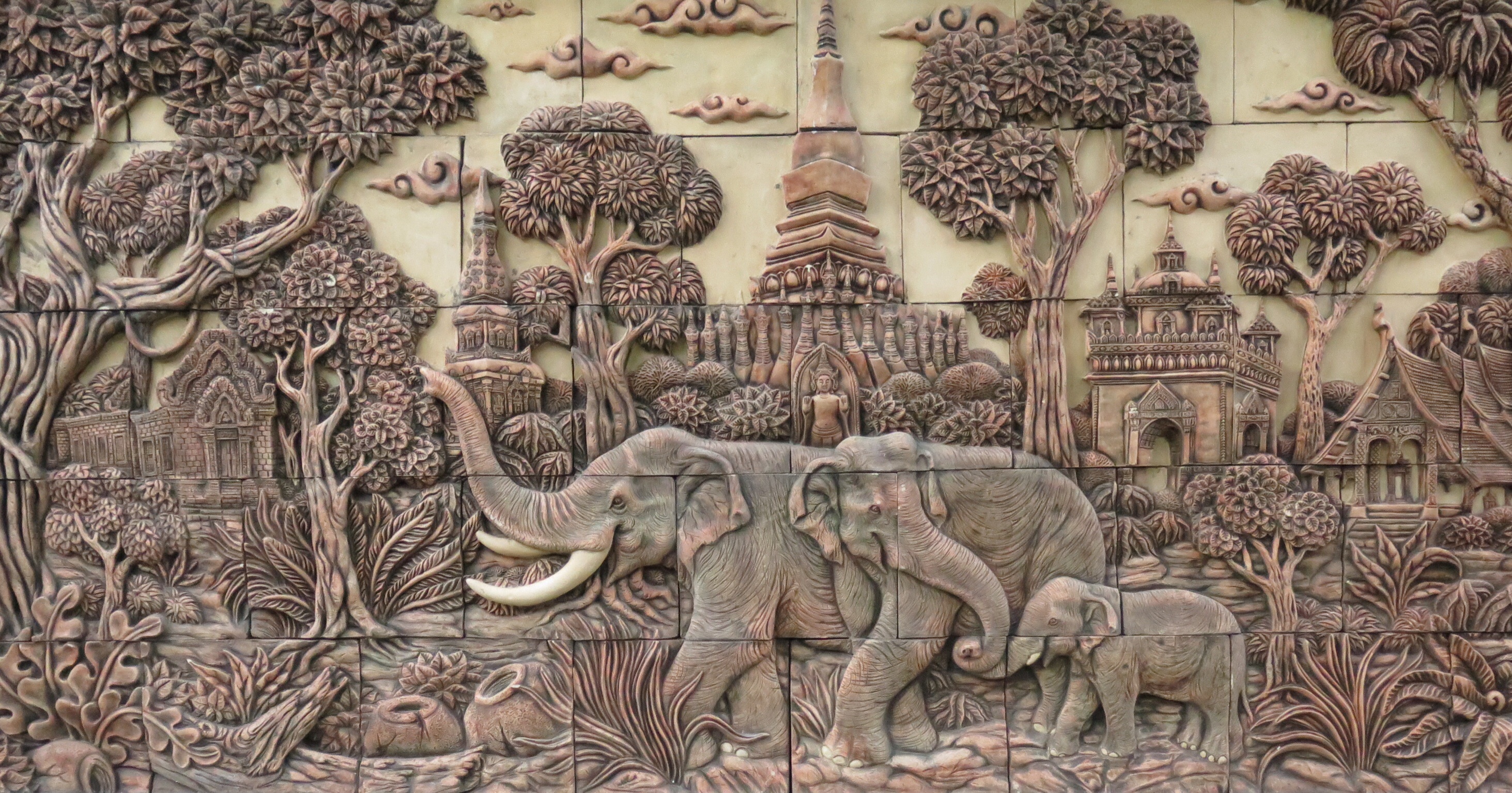
Laos is one of the poorest countries on the planet. Currently a third of the population lives below the international poverty line of $1.25 a day. In 2103 the country ranked 138th in the world on its Human Development index and was according to the Global Hunger index ranked the 25th hungriest nation on the planet. It has a poor human rights record and corrutpion in the Marxist government is common place. Against this backdrop however, the tourist industry has, in recent years, grown rapidly. Indeed by 2010, 1 in every 10 jobs in Laos was in the tourist industry.
Apart from the towns where shops, restaurants, hotels, guides and many many others benefit from the tourist industry we experienced just how important tourism is to the people of the countryside where subsistence agriculture still provides 80% of all employment.
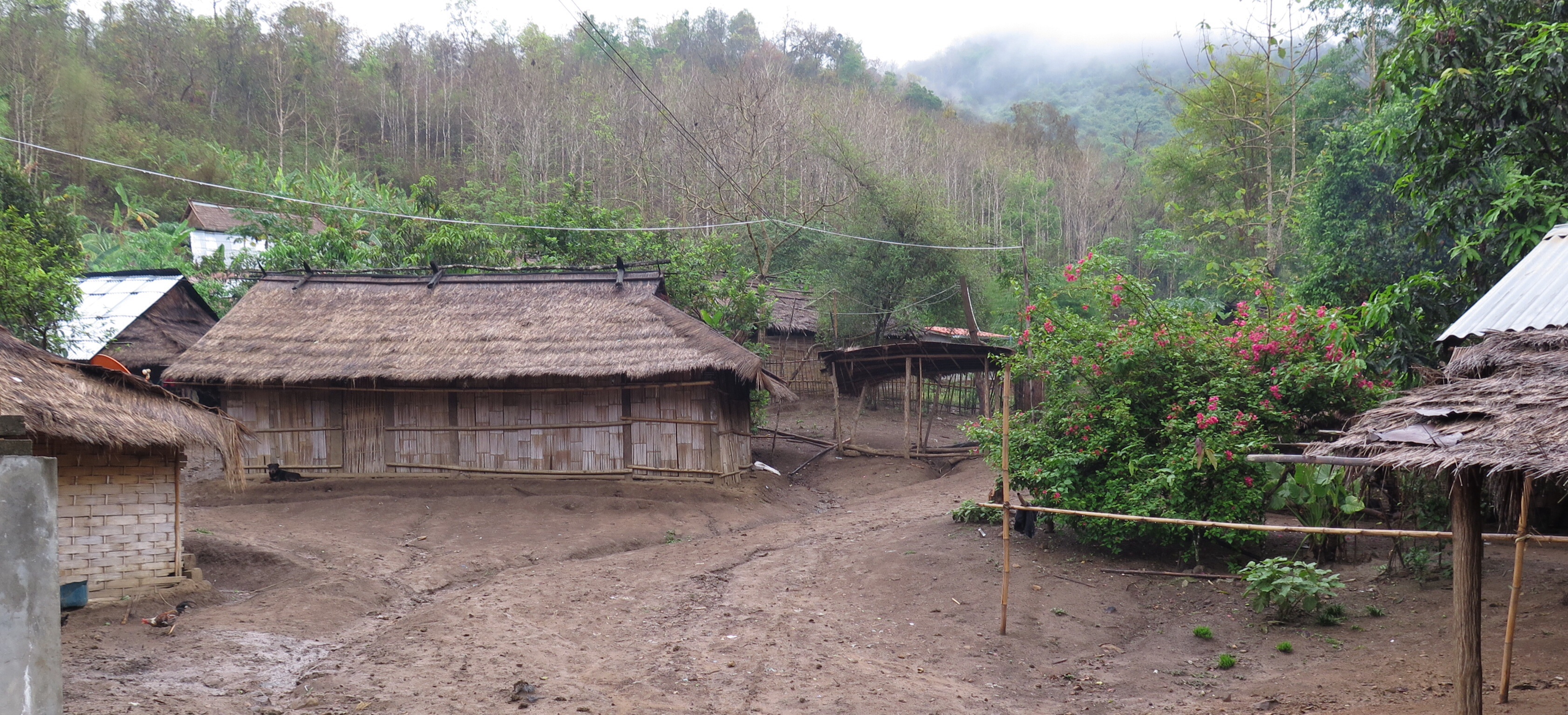
On a trip to the Kuang Si waterfalls an attraction some 25km south of Luang Prabang we stopped at Ban Ou a small village of Lao Lum which has certainly taken advantage of both the growing tourist industry and its position as an ideal ‘stopping off point’ to the waterfalls. Here you can watch locals take you through the process of creating cotton thread from raw cotton with of course the opportunity to buy a small gift at the end – perhaps more interesting was the ‘gift’ of 3 kg of bananas that our guide received in return for our visit. It was never made clear whether the size of the bunch was proportional to the amount of our purchase.
Yards away children sold traditional Laos trinkets – beaded bags and wrist bands for what was for us no more than a few pence although we still think twice about paying out tens of thousands of kip for even the most basic item – there are 8,000 kip to a dollar so the numbers quickly mount up.
The only concrete path conveniently takes you on a route directly through the village. Tradesmen had set up early, we arrived just before 9am, and already a woodcarver was half way through his first elephant of the day. Other stalls were gradually taking shape .


The village though does not just depend on tourism to improve its way of life. The European Union has provided money for basic sanitation projects, most houses now have toilets linked to a main sewage system. It has also provided electricity which, from what we saw, not only provides light but allows the charging of mobile phones whiich as much the must have item here as they are anywhere else in the world. Both these improvments to the villagers way of life has, our guide claimed, helped to reduce the drift of large numbers of youn people away from the coutnryside.
 66
66 